Krones takes the implementation of its climate strategy seriously – and the numbers prove it! The company has already reduced its operational greenhouse gas emissions by around 52 percent since 2019, bringing it much closer to its interim goal of achieving an 80 percent reduction by 2030. One of the key measures aimed at cutting emissions further is the electrification of the vehicle fleet, because about 23 percent of emissions at Krones are caused by traffic and transport: “In particular, the vehicle fleet constitutes a huge source of emissions. As the Group is already purchasing green electricity for all its production sites and driving the own generation of solar power worldwide, switching to electric drive would be a significant lever for reducing emissions in the long term,” Jens Lücke, Climate Management Expert at Krones, explains.
The combustion of fossil fuels generates around one fifth of the greenhouse gas emissions in scope 1 and scope 2 of our Group. To counteract this, Krones is focusing increasingly on e-mobility – and doing so worldwide.
Mobile, flexible, sustainable
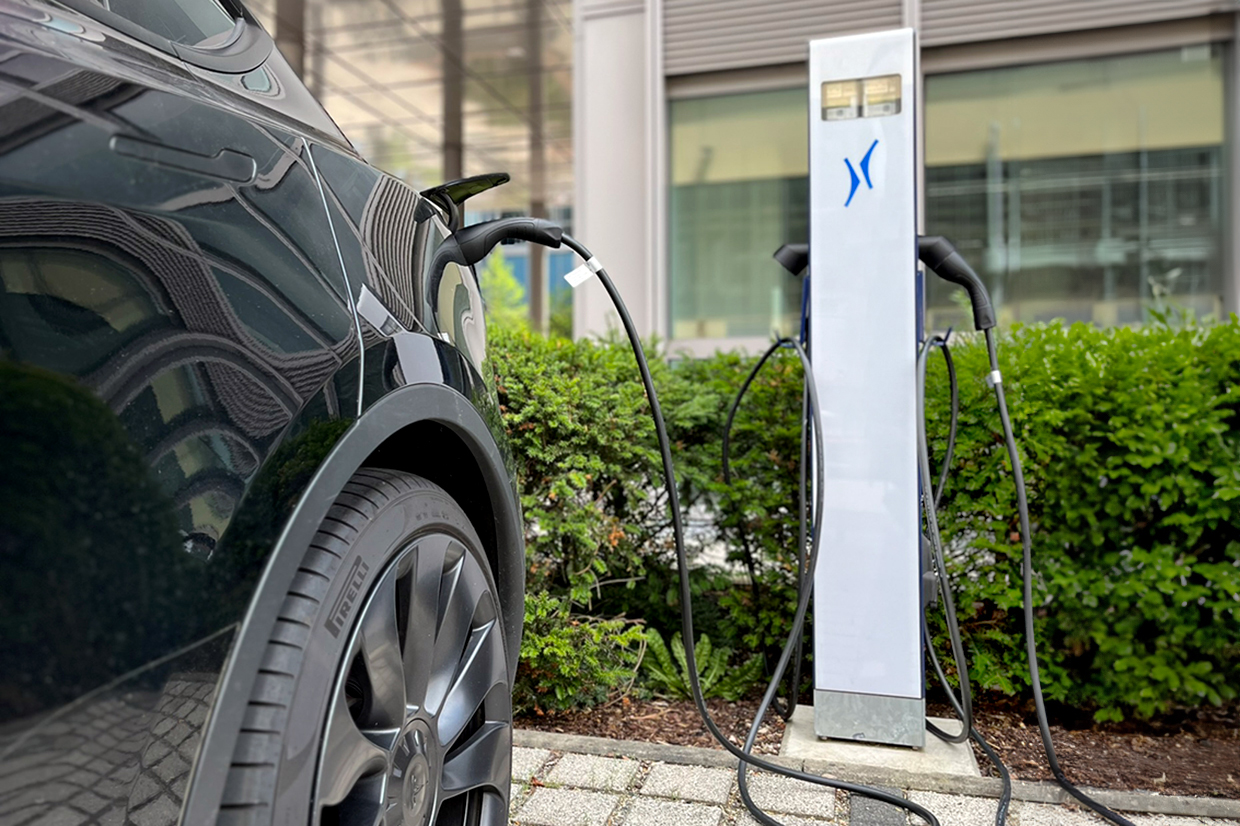
For many employees in sales or service, flexible mobility is absolutely essential. However, this does not preclude the electrification of the vehicle fleet – on the contrary: A shift towards e-mobility is bang on trend and can be observed across the world. Especially in Europe and Asia, a comprehensive charging infrastructure is available, so that standard business activities can also be carried out easily with electric cars. That much is confirmed by the positive response from those employees who travel around Germany for Krones. Thanks to the well-established charging infrastructure, shorter fast-charging times and the high range of modern electric vehicles, an electric drive now represents an attractive alternative to the conventional combustion engine for field service staff too.
Thinking about tomorrow today
A switch to e-mobility has long-term benefits for people, the environment and Krones alike. For instance, in contrast to fossil fuels sourced from outside Europe, green electricity is generated locally. That enables the company to improve the resilience of its energy supply chains, security of supply and independence from central networks – particularly through the use of its own photovoltaic systems. Changing to an electric drive also saves on running costs and maintenance: The predominantly low-cost charging processes on the company’s grounds or at employees’ homes mean much lower running costs per 100 kilometres. Fewer wearing components, the elimination of emissions tests and mature, tried-and-tested technology also minimise the costs of maintaining electric cars.
In addition, leasing rates are expected to align with those for conventional cars, thanks in part to falling prices for new cars and depreciation figures similar to those for combustion engines. Not only that, but fossil fuels for vehicles and heating will become more expensive across Europe in 2027, when ETS2, the emissions trading system for buildings and transport, will require businesses to buy emissions certificates for the sale of CO₂-taxable fuels. The costs this incurs will be passed on, so an increase in fuel prices is to be expected, which will also affect vehicles that are already leased today.
Driving towards a sustainable future together
In Germany, e-mobility is also subsidised by the government: In addition to the tax exemptions allowed for electric cars, there is also a general group policy stipulating that electric cars are to be used in future when purchasing leased vehicles, such as company cars for executives and functional vehicles. As old leases run out, even greater progress towards the electrification of the vehicle fleet is therefore expected to be made within the next few years. In Germany, Krones is taking great strides in this direction, with 262 out of a total of 611 cars in the vehicle fleet already electrified. Status cars account for the bulk of them: 126 out of 182 in total are electric.
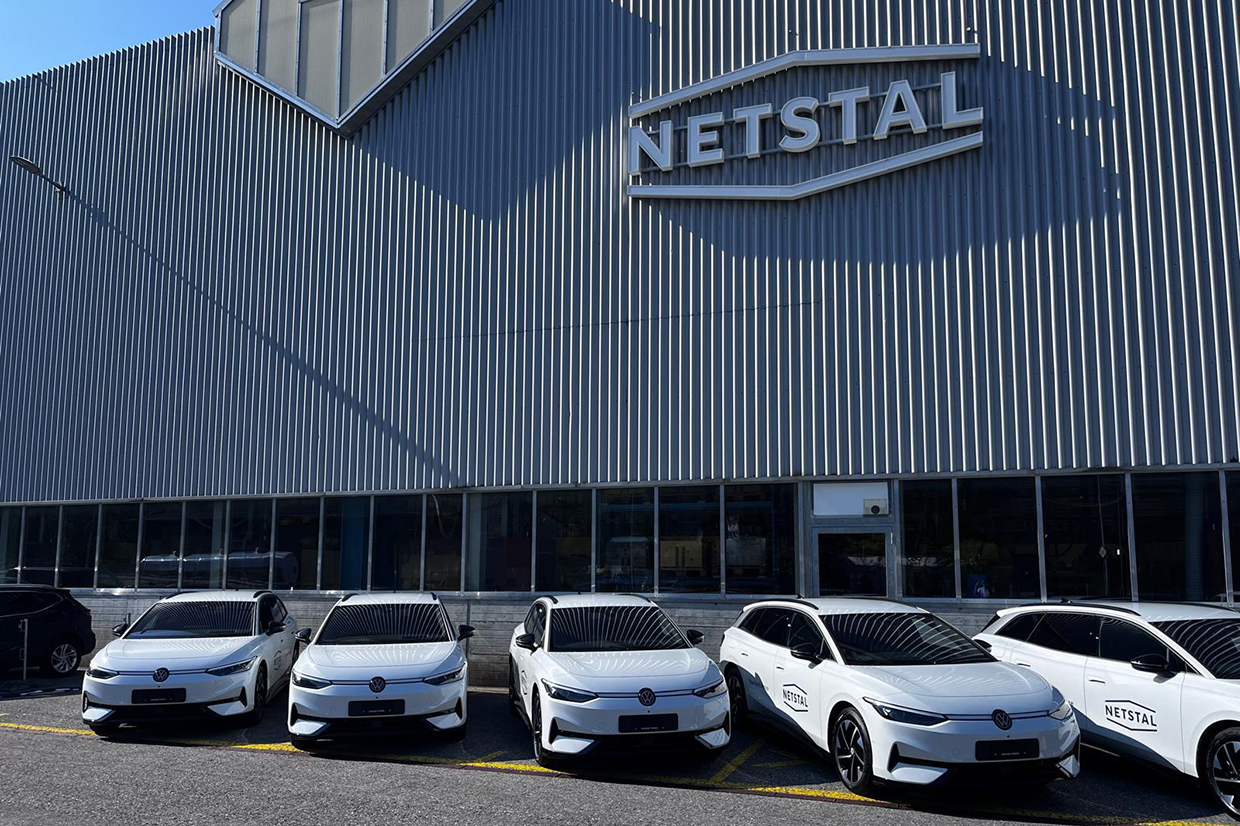
The international sites and subsidiaries are also accelerating the pace of fleet electrification. The front-runner in terms of the proportion of electric vehicles in the Group as a whole is the Swiss subsidiary Netstal: 21 of whose 28 cars are electric models. “We can already see quite clearly how e-mobility has changed CO2 emissions over the last three months – we will have achieved a significant reduction by the end of 2025,” Michael Rocholl, Chief Quality and Sustainability Officer at Netstal, states.
With 59 electric and 12 hybrid cars out of a total 123, the Italian subsidiary System Logistics is also making progress.
At Krones China, only one out of a total of seven cars currently has an electric drive. Nonetheless, there are already concrete plans in place to electrify the entire vehicle fleet as well.
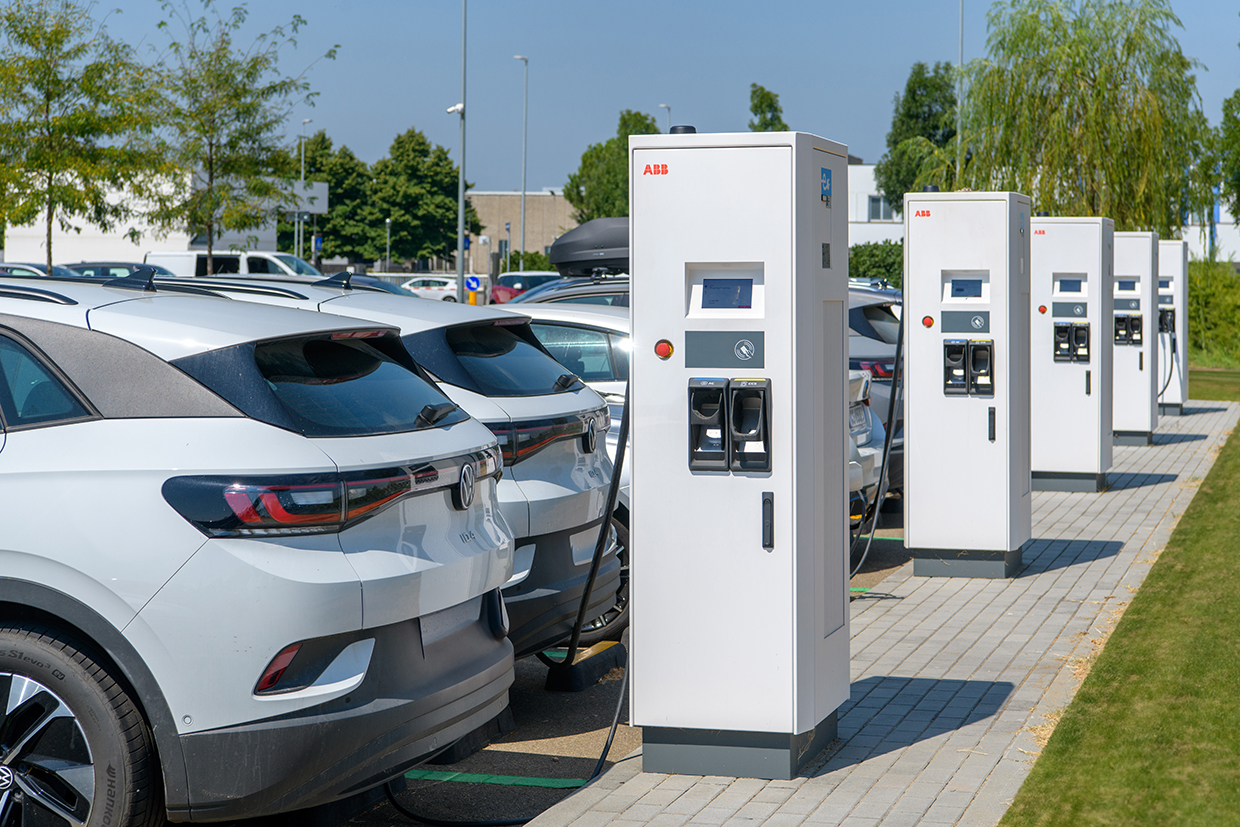
This commitment demonstrates vividly that everyone at Krones, both in Germany and worldwide, is pulling together to reduce the carbon footprint. Structured plans, clever strategies and responsible initiatives should help curb transport-related emissions in the future, thereby bringing the company closer step by step to its goal of achieving net-zero emissions by 2040.
Right or wrong?
Between fire hazard, susceptibility to breakdowns and dubious battery disposal, prejudices against electric cars still persist stubbornly in people’s minds – and influence their purchasing decisions. According to a study by the Fraunhofer Institut*, however, many of these myths are not supported by the science:
– The fire hazard in electric vehicles is no higher than with conventional vehicles, because the chemical stability of new battery types such as lithium-iron phosphate and sodium-ion makes them less susceptible to fire.*
– According to ADAC breakdown statistics released in 2025, two to four-year-old electric cars are less likely to break down than their petrol or diesel counterparts of the same age (3.8 vs. 9.4 breakdowns per 1,000 vehicles in 2024).
– The EU Battery Regulation (2023/1542) promotes recycling and second-use concepts, which can cover up to 30 percent of the demand for lithium, nickel and cobalt and help lower the carbon footprint of batteries by up to 80 percent.*
– Extraction of the raw materials used for batteries brings ecological and social risks. Improvements are to be brought about through new technologies, government control and statutory requirements such as the German Supply Chain Act.*
– Ecological amortisation: The higher CO₂ emissions caused by the production of electric vehicles are quickly offset by their low-emission operation.*
* The publication “Batteries for Electric Cars: Fact Check and Need for Action – An Update” is available for free here.