Digital twins optimize supply chains in the beverage industry with real-time data and KI – for efficiency, resilience, and sustainability.
This article was written by Niraj Kumar Jha.
Image credits:
Niagara Bottling
The beverage industry is facing a paradigm shift: Instead of relying on retrospective dashboards, leading companies are embracing digital twins – AI-supported, dynamic representations of the supply chain. This technology integrates real-time data from connected sensors, ERP systems, and external sources to not only monitor operations, but also to simulate scenarios, predict outcomes, and provide actionable recommendations.
For decades, dashboards have been the centerpiece of operational visibility in beverage manufacturing and logistics. Executives and plant managers have relied on colorful charts and performance indicators to track everything from production throughput to transportation efficiency.
The dashboard dilemma
But dashboards have a fundamental flaw: They tell us what has already happened, not what’s happening right now, and certainly not what will happen next. By the time a red KPI lights up, the truck has already left late, the silo has already run dry, or the warehouse team is already firefighting a disruption. Dashboards are retrospective; they provide awareness, not foresight.
In an industry where margins are razor-thin, customer expectations unforgiving, and supply chain disruptions increasingly common, operating “in the rear-view mirror” is no longer good enough. Beverage companies must shift from simply monitoring performance to actively shaping it in real time.
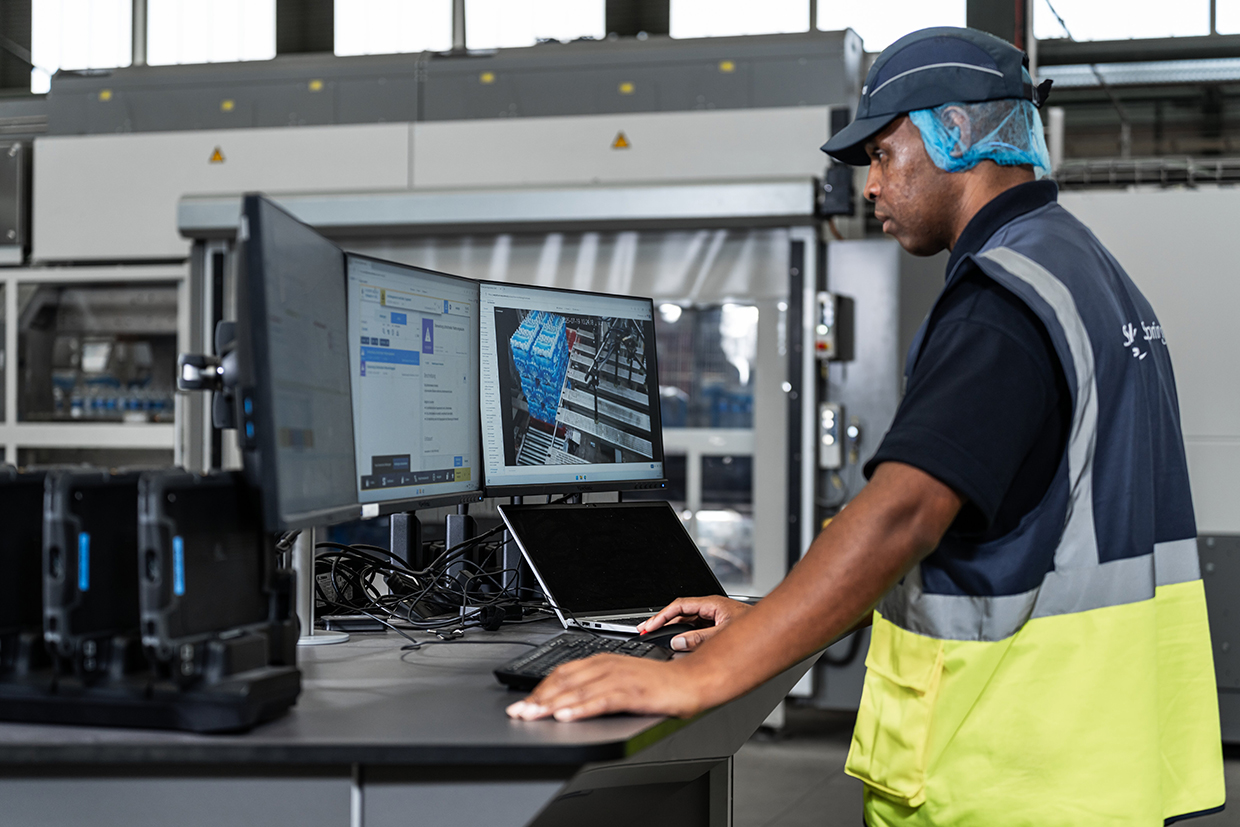
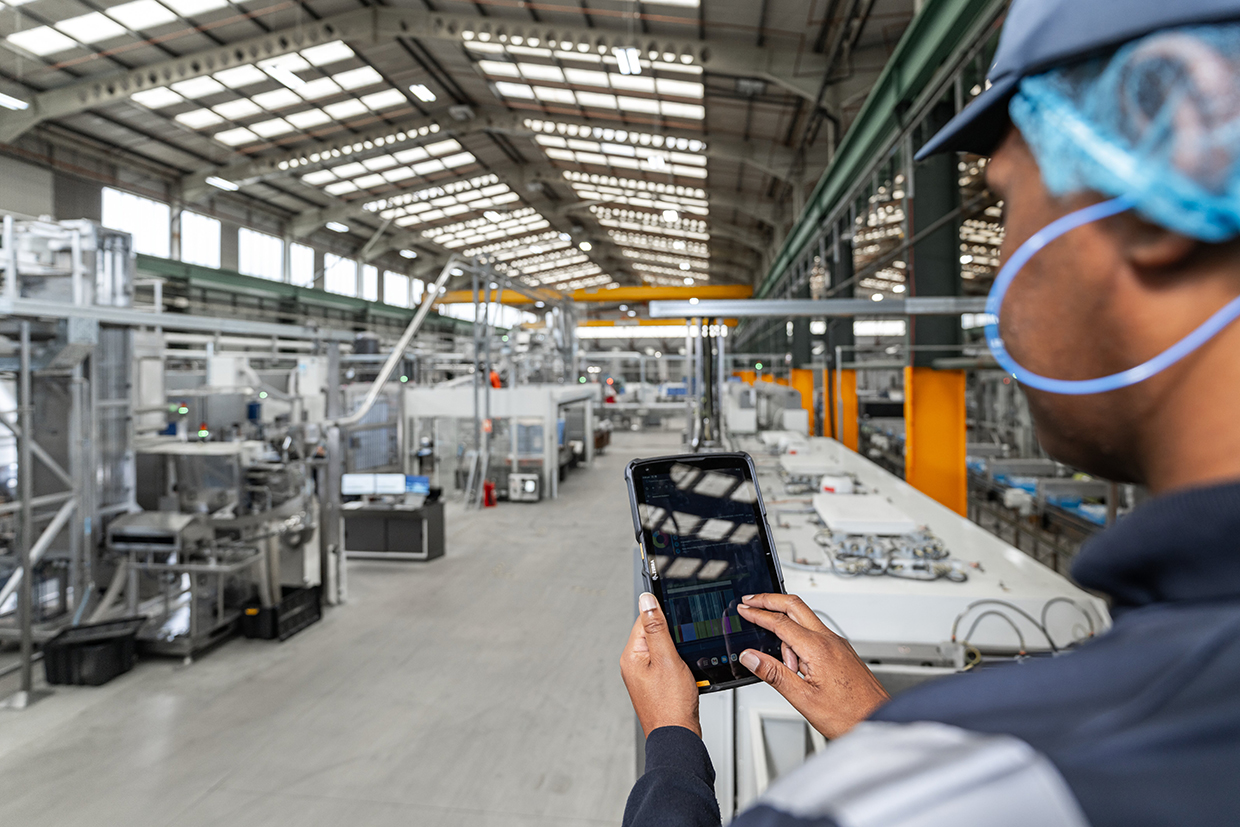
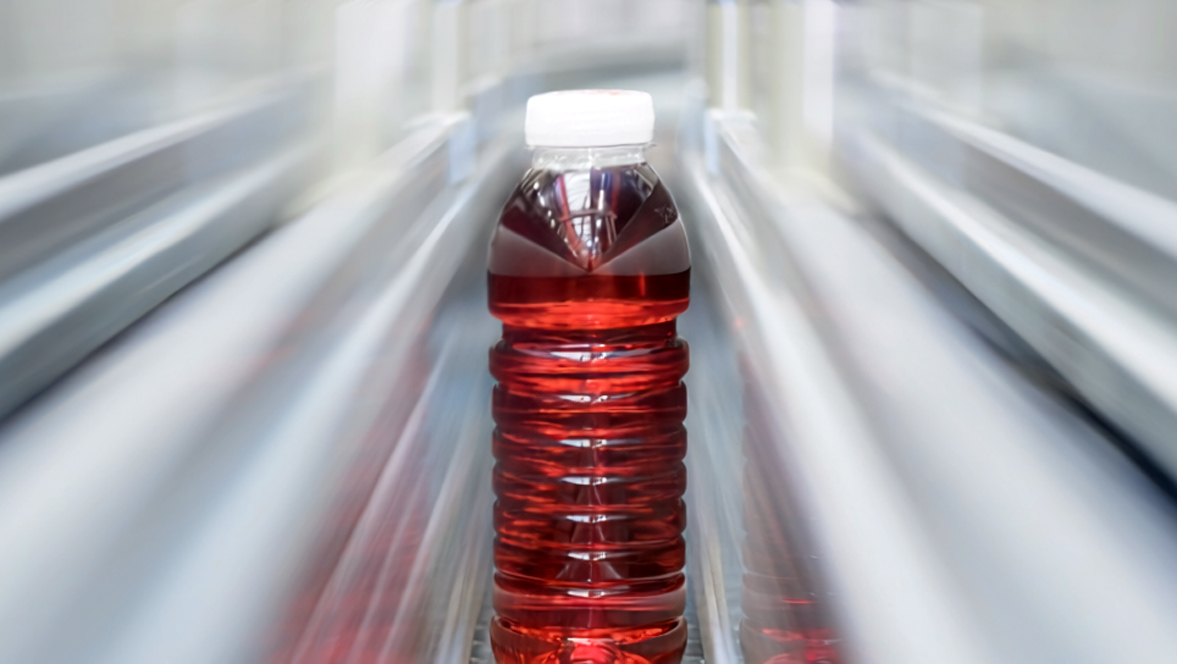
With active real-time control, beverage manufacturers can continuously monitor and manage their lines.
Enter the digital twin
The answer lies in the rapid rise of digital twin technology: dynamic, AI-enabled replicas of real-world supply chains. A digital twin integrates live data from IoT sensors, ERP systems, logistics platforms, and even external feeds like weather or traffic conditions.
Unlike a dashboard, which freezes yesterday’s story into static charts, a digital twin is a living model. It doesn’t just report – it simulates, predicts, and prescribes.
Simulation: test what will happen if a filler line goes down or a highway closes
Prediction: forecast inventory depletion across multiple plants with real-time demand signals
Prescription: trigger corrective actions automatically – like tendering a load to a carrier before a disruption cascades
In practice, this means a shift from asking “what happened?” to “what should we do right now?”
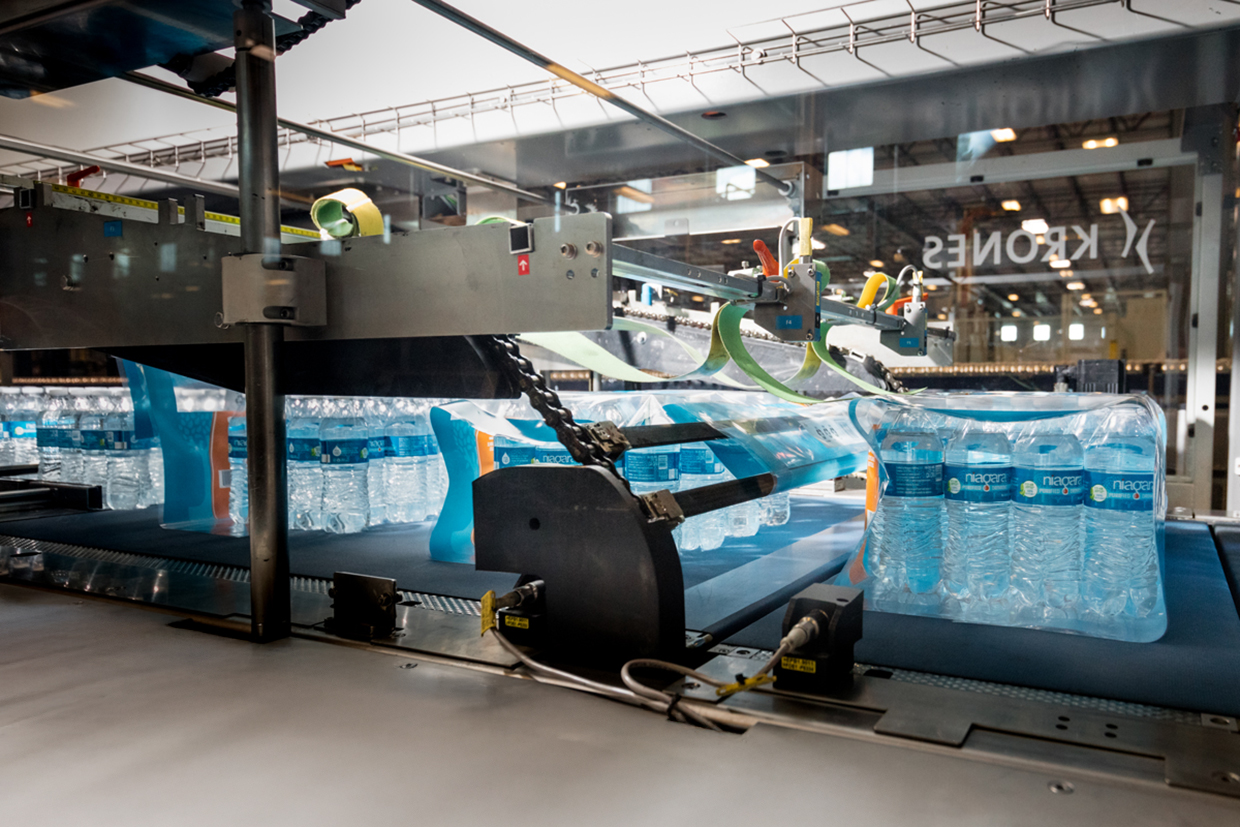
Forecasting inventory consumption can not only control autonomous material supply within a plant, but also predict inventory consumption across multiple plants.
Krones has already taken this leap with its so-called Agentic Digital Twins, which combine physically accurate simulations with AI agents capable of autonomous decision-making. “With Agentic Digital Twins, we are demonstrating that digitalization and AI are not just visions for the future but deliver tangible efficiency gains and sustainable benefits today,” says Markus Tischer, Member of the Executive Board of Krones AG.
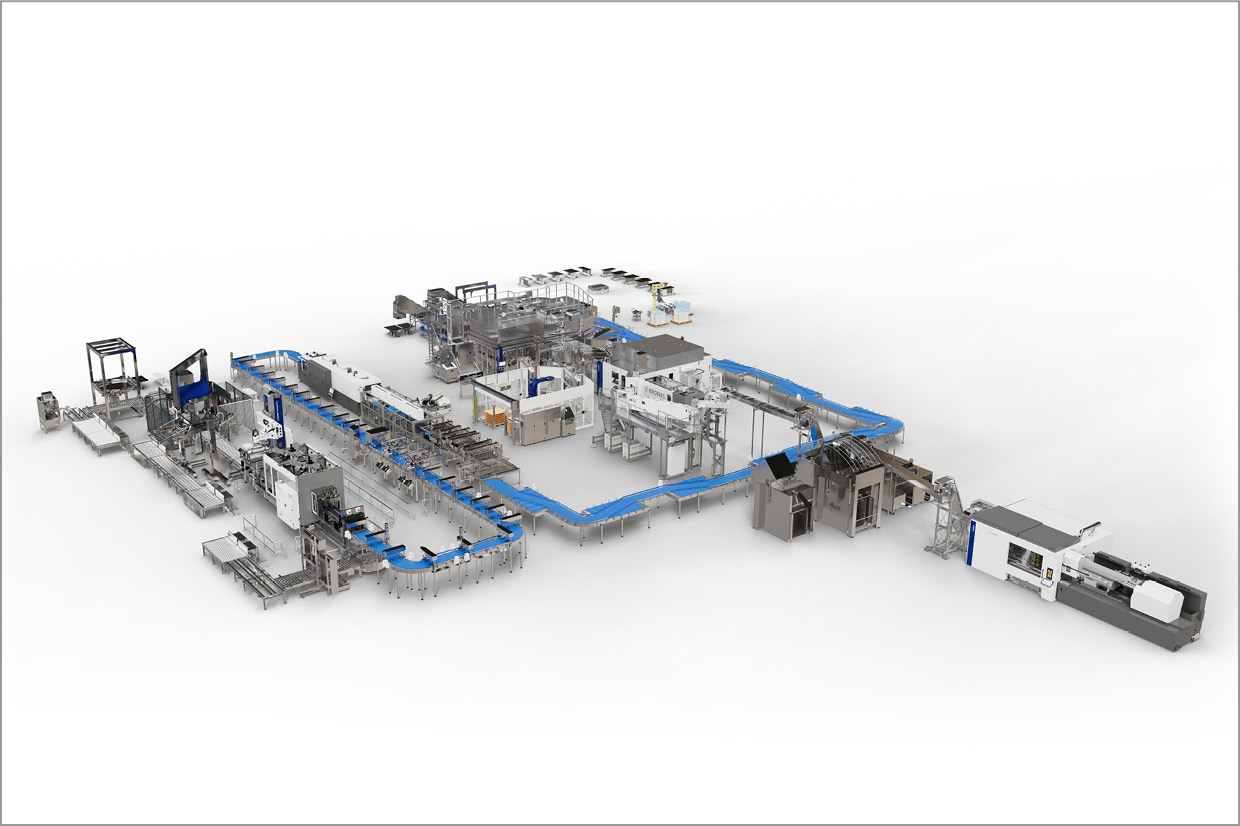
These digital twins are also being used in the design and optimization of Krones’ new Ingeniq line concept, which was unveiled at drinktec 2025. Ingeniq integrates modular machine architecture, autonomous material handling, and AI-driven process optimization – all supported by digital twin simulations.
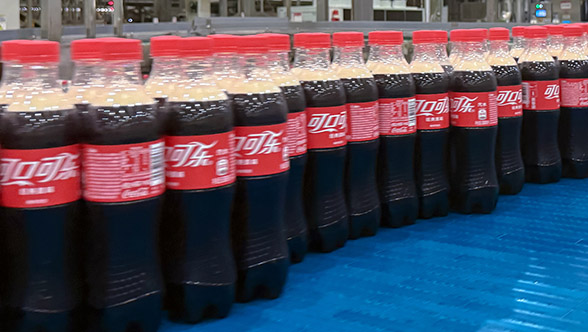
At drinktec 2025, Krones presented Ingeniq, the line of the future: data-driven and fully automated.
From KPIs to decision engines
The leap from dashboards to digital twins also changes the role of KPIs. Traditional metrics are siloed: OTIF (on-time, in-full), cost per case, line efficiency, and transport utilization each tell a piece of the story. Managers are left to reconcile them, often with conflicting priorities.
To solve this, we developed the concept of the “Mother KPI” – a unifying performance signal that synthesizes multiple dimensions into one dynamic indicator. The Mother KPI acts as the heartbeat of the digital twin, continuously balancing cost, service, and sustainability.
Here’s how it plays out in real life:
If a carrier recovery win is claimed but it delays customer delivery, the Mother KPI ensures the decision engine prioritizes service reliability over a narrow cost metric.
If a plant’s production team pushes output beyond storage limits, the Mother KPI links back to logistics capacity, preventing overproduction that will later sit idle.
Instead of optimizing in silos, the system optimizes the whole. Thomas Albrecht, Head of Simulation at Krones, adds: “Our solution integrates AI-based high-end fluid simulation into the digital twin of the filling machine, unlocking completely new possibilities for prediction, optimization, and visualization.”
Predictive vendor-managed inventory
One of the most powerful applications of this shift is predictive vendor-managed inventory (VMI). Traditionally, VMI has been reactive: suppliers replenish when they see stocks drop below a threshold. With AI and digital twins, VMI becomes anticipatory.
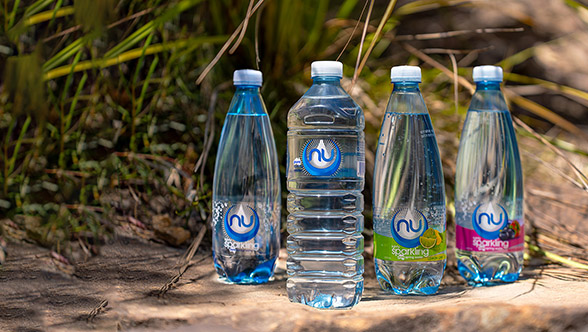
Imagine a resin supplier connected directly to Niagara’s silos through the twin. The model forecasts usage rates, production schedules, and delivery constraints – then signals replenishment before a shortage occurs. Even better, it can balance multiple plants at once, dynamically rerouting supply to where it’s needed most.
The result? Lower safety stock, fewer emergencies, and smoother collaboration across the supply chain.
Krones’ Ingeniq line also benefits from predictive capabilities. Through its digital access via the Connect and Secure package, production data is continuously monitored and analyzed, enabling proactive service and inventory decisions.
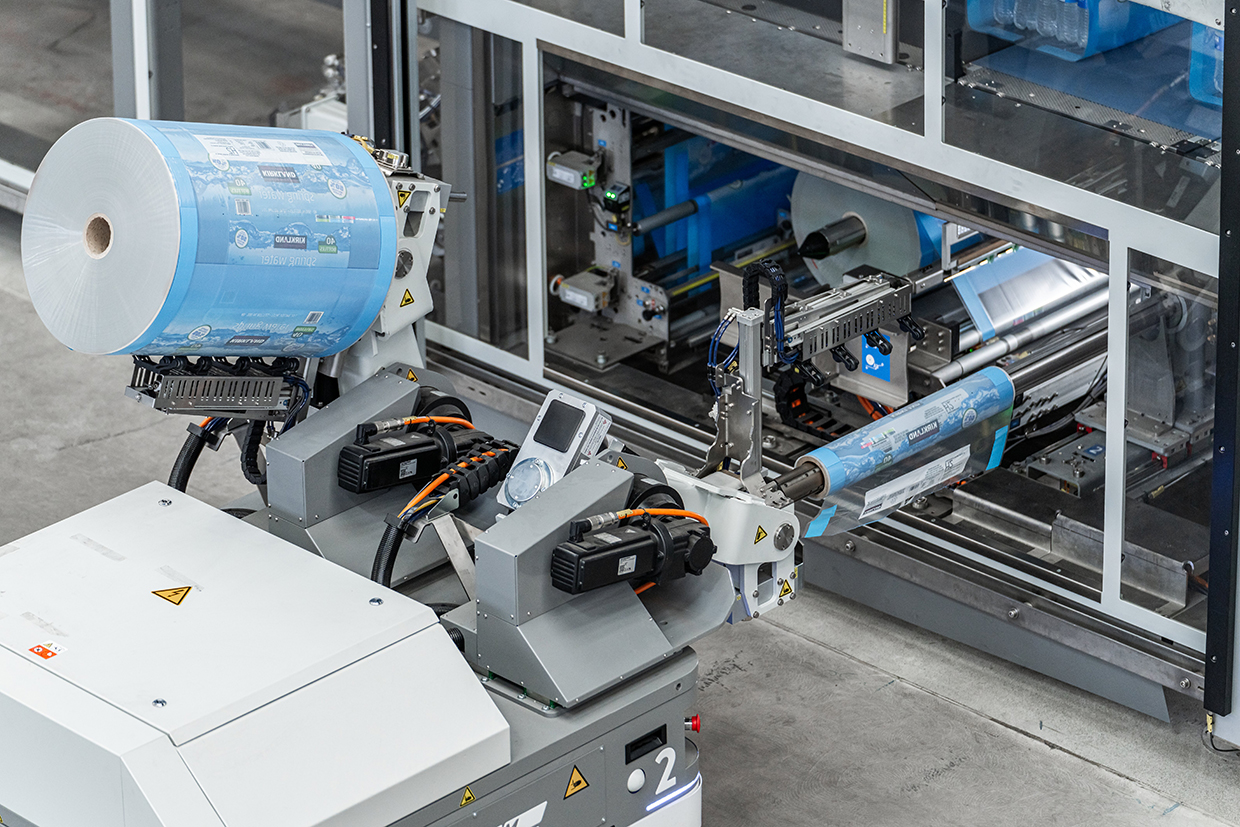
With predictive VMI, consumables can be automatically reordered from suppliers, further increasing line efficiency.
Image credits: Niagara Bottling
Automated tendering: AI at the dock door
Tendering loads has always been a time-consuming human process, involving emails, calls, and negotiation. But with a digital twin, the decision-making engine can automate much of this work.
If a carrier has the right equipment, capacity, and historical reliability, the system tenders the load instantly.
If market conditions change (e.g., a sudden fuel spike), the system simulates alternatives before committing.
Humans remain in the loop for exceptions or strategic oversight, but the twin handles the routine.
This not only cuts cycle times but also levels the playing field, ensuring every carrier is evaluated on data-driven performance, not just relationships.
Resilience meets sustainability
The move from dashboards to digital twins isn’t only about efficiency. It’s also about building resilience and sustainability into the beverage supply chain.
Resilience: The twin can simulate shocks – from labor strikes to natural disasters – and prescribe alternate routes, modes, or suppliers. Instead of reacting weeks later, the organization adapts instantly.
Sustainability: Optimized transport reduces empty miles, AI-driven production alignment reduces waste, and better demand-supply balancing lowers energy intensity per case produced.
For beverage manufacturers facing increasing scrutiny on carbon footprint and ESG performance, these benefits are not just operational wins but strategic necessities. Krones’ digital twin approach contributes directly to sustainability goals. By reducing simulation times from three to four hours to under five minutes, resource usage is optimized, waste is minimized, and energy consumption is lowered – especially in fluid processing applications.
Human-centric AI
One common fear is that AI will replace people. In reality, digital twins work best when they empower humans to make higher-quality decisions.
Line supervisors, planners, and logistics coordinators are freed from chasing spreadsheets and dashboards. Instead, they focus on scenario planning, customer collaboration, and continuous improvement. The machine handles monitoring and repetitive decision-making; the human steers strategy.
This human-centric AI approach is especially important in an industry built on decades of practical expertise. Digital twins don’t erase that expertise – they amplify it.
Digital twins provide line supervisors, planners, and logistics coordinators an overview of all relevant data – and create space for what matters: scenario planning, customer collaboration, and continuous improvement.
The road ahead
Transitioning from dashboards to digital twins doesn’t happen overnight. Most organizations will move through three stages:
Hybrid models: some predictive triggers layered on top of dashboards
Full digital twin ecosystem: end-to-end orchestration with automated decision engines
For beverage companies, the urgency is clear. Customer expectations are rising, cost pressures intensifying, and disruptions multiplying. Staying in the dashboard era risks being left behind. Those who embrace digital twins will not only gain efficiency – they will unlock resilience, sustainability, and strategic agility.
Call to action
The beverage industry has always been defined by its ability to adapt – from glass to PET, from manual bottling to fully automated lines. The next great leap is from dashboards to digital twins.
For leaders across the sector, the question is not if this transition will happen, but how quickly. Those who seize the opportunity now will shape the future of beverage supply chains.