Recycling has played an increasingly important role within the Krones Group for more than two decades now. Our goal is to eventually feed at least 30 per cent of the plastics brought to market by way of Krones equipment back into the loop in the form of recovered material. Dr. Michael Gotsche, Managing Director at Krones Recycling GmbH, calls it “Closing the loop”.
“Plastic waste isn’t garbage. It’s a re-usable material with great potential that can be unlocked by recycling.” This statement clearly reflects the Krones Group’s attitude: Sustainability is key, and making an active contribution to the global circular economy is a matter of course. With Krones Recycling, the company is investing in pathbreaking technologies and innovative concepts for efficient recovery of used plastic containers, thus helping to shape the future of recycling.
Innovations – already successfully in use
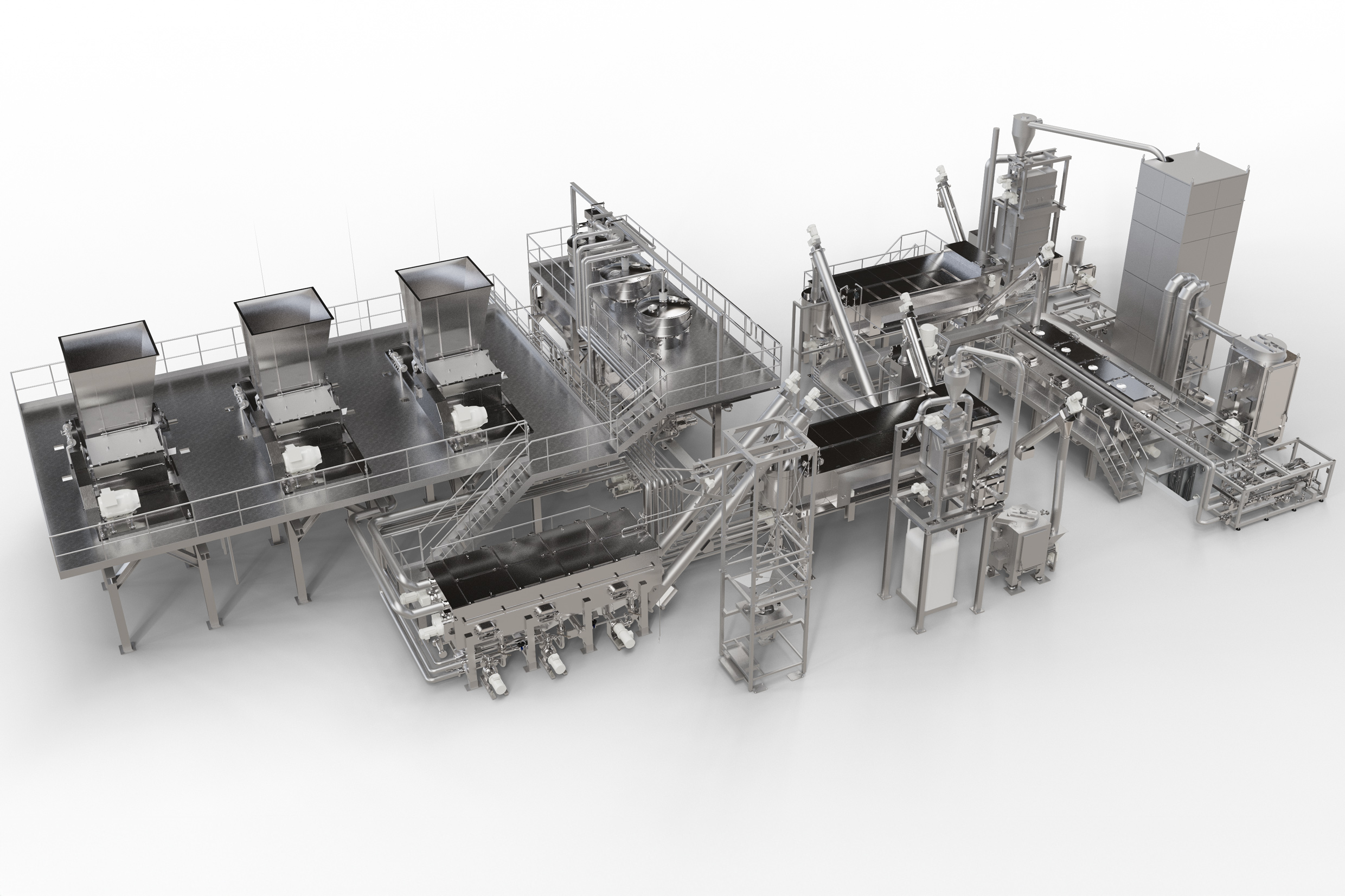
Collect, compress, bale, sort, grind, wash, reprocess – Put simply, these are the steps in a recycling process. In the field of washing, in particular, Krones Recycling has already been able to implement a number of innovations, such as the newly developed washing module MetaPure Compact that enables used plastics to be efficiently washed with minimum amounts of water and energy. This is made possible, for example, by keeping the water needed in the system and re-using it again and again. That means the customer benefits from substantial savings without compromising on quality. The result of the washing process is top-notch recyclate in the form of flakes that can also be turned into food-grade pellets suitable for further use in the food industry. What’s more, the range of materials that can be recycled on Krones kit has also grown. Whereas the machines and lines initially developed by Krones focussed only on bottle-to-bottle recycling of PET packaging, they are meanwhile capable of also turning PP, HDPE, PS and even PET trays or L(L)DPE films into top-quality recyclates.
All of these innovations embody the company’s explicit aspiration to be up there among the world’s technological leaders in the field of innovative recycling solutions and thus be able to offer its customers equipment that is not just good but pathbreaking.
In order to develop such kit, Krones set up a dedicated base for carrying out research and tests for its customers: the Krones Recycling Technology Center where small-scale tests and analyses can be conducted on an industrial line. “At present, our team are working on developing a new solution for washing LDPE, for example,” says Matthias Dawartz, Head of Global Project Execution and Process Engineering at Krones Recycling.
Other systems, modules and machines are also continuously upgraded here under laboratory conditions – always keeping a close eye on possible future market trends and requirements. “Research and development, and the resulting innovations, are not optional extras. They are crucially important for a company’s profitability and competitiveness,” says Managing Director Michael Gotsche about the idea behind the Recycling Technology Center.
Regulatory framework is fuelling growth: high-tech is signposting the way to tomorrow’s circularity
But how do you actually organise a financially viable recycling plant? “As things stand at present, the low price for crude oil means it is cheaper to buy virgin plastics than recycled material,” explains Dr. Michael Gotsche. “That’s why the regulatory framework is so important for us.” Because more stringent recycling quotas and sustainability requirements drive innovation. “The European Union intends to specify recycling quotas for all packaging materials in future, and that will also include packaging films for which there aren’t sufficient recycling technologies and capacities available today. We’ve already delved into the relevant research and development work,” says Michael Gotsche.
And it is exactly this field that is brimming with opportunities for Krones Recycling because the higher the requirements posed, the stronger the push to drive new technologies and processes and fresh ideas. The company is already laying the groundwork for the next development steps.
At present, their specialists are investigating a number of questions to do with process optimisation and quality. In the context of global regulations, both these issues will in future gain ever more importance. That is because in addition to significantly more stringent EU stipulations, for example with taxes on plastic, mandatory recycled content and upcoming deposit systems, similar trends can also be observed on international markets.
One major focus is on further minimising the production of fine particles in order to reduce material losses and increase yields. The first such developments are already up and running, and further potential is being successively unlocked. Krones Recycling intends to develop technological upgrades (like introducing hybrid processes and material innovations) that will improve recyclate quality and yields to such an extent that Krones lines and systems can be relied on to meet legal requirements while simultaneously creating financial benefits for their users. Research and development thus become key elements in turning rules and stipulations into a palpable competitive edge.
These regulations also turn competition into yet another innovation driver because whoever is among the first to meet any given requirements will gain market shares and be able to establish a position as technological leader. Companies and consumers likewise demand innovations. “Many of our customers want a higher level of recyclate purity and transparency, or they have to meet ESG criteria for their shareholders,” says Michael Gotsche. And sustainability has meanwhile become a definite must for many consumers as well.
The strategic vision aimed at more sustainability and circularity clearly signposts the way. Technological innovations are the means for transforming that vision into reality.
 Dr. Michael GotscheManaging Director at Krones Recycling
Our vision: a digital and sustainable future
In the years ahead, Krones Recycling intends to establish itself as a leading vendor of recycling technologies that will remain viable in the long term. In order to achieve this goal, the company invests especially in digital solutions and up-to-the-future systems like artificial intelligence.
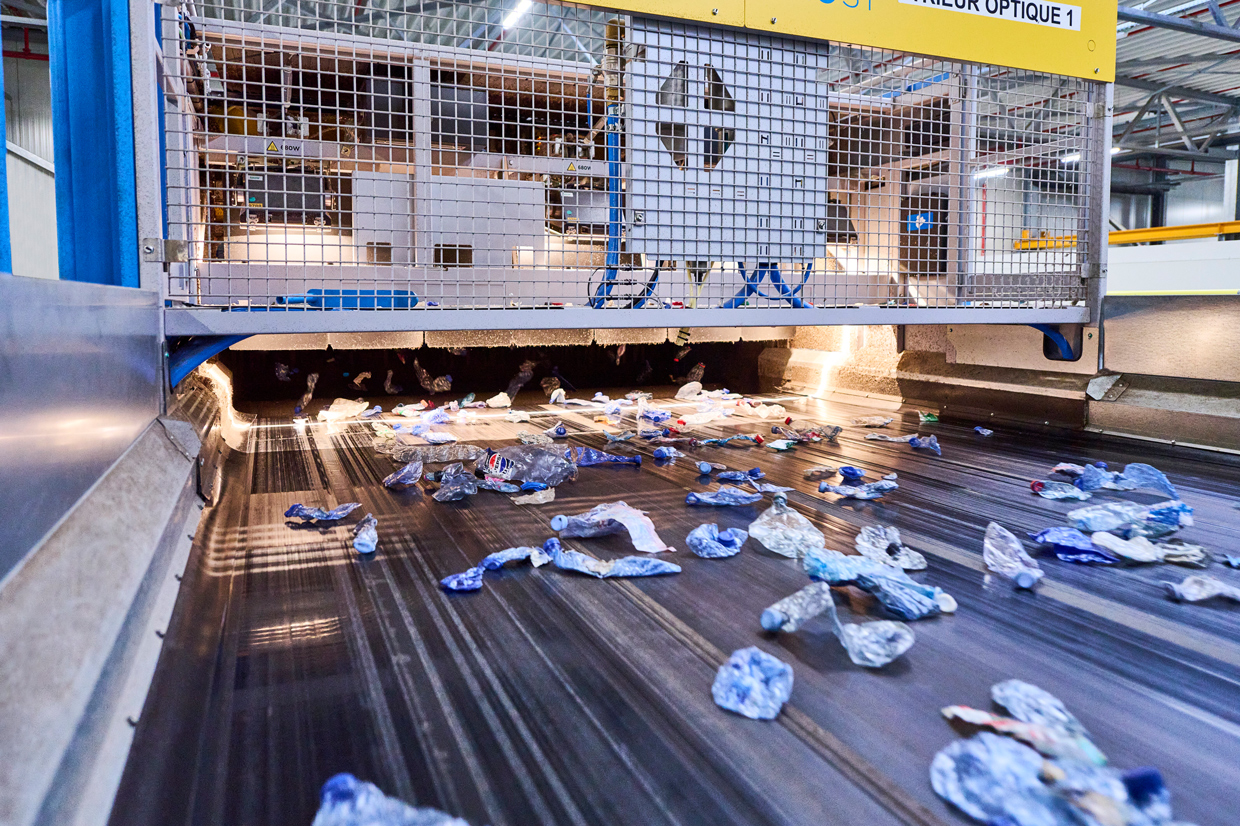
That applies above all to optimising the sorting of input materials: The use of AI improves sorting efficiency, which in turn increases the recyclate’s purity. That is particularly advantageous when complex material flows are involved. “Traditional sorting is based on separating the incoming material by colour and polymer type, with the objects analysed and sorted at high speeds before being shredded. That has so far worked very well, but AI will enable us to improve sorting even further,” says Michael Gotsche. It would be conceivable, for example, to program the sorting function so that it can identify an object and its manufacturer, and thus the material the object is made of. That would enable the system to sort out food-grade material straight away. “In short: If AI can separate yoghurt tubs from shampoo bottles, that will render recycling a whole lot more efficient and accurate,” sums up Michael Gotsche. Krones is already using AI in this field today, but according to Gotsche there is still immense optimisation potential waiting to be tapped.
What is more, Krones Recycling also conducts research in the field of adaptive systems. As their name implies, these can adapt themselves to the quality of the input material, thus substantially determining the grade of output. A project intended to find out to what extent and in what way the quality of plastic waste affects the washing parameters is currently being carried out in collaboration with RWTH Aachen University. “The aim is to develop a system that automatically matches the washing parameters to changing material characteristics, thus ensuring a consistently high grade of recyclate,” explains Michael Gotsche. Improved process quality will in the end upgrade energy efficiency and be able to significantly reduce material wastage.
Another project researching data-based process optimisation tackles similar goals. Here, AI and machine learning are used to forecast material flows and maintenance needs. Such predictive control is intended to cut downtimes and ensure an even more efficient use of resources.
“These research projects are aimed at designing fully automated systems with self-learning control loops that ensure maximum resource-economy,” says Michael Gotsche. “In this context, a more efficient use of resources not only ensures ecological sustainability as demanded by regulatory authorities but also economic sustainability that benefits customers – a win-win situation and a benchmark for Krones Recycling.”
Design for recycling – keeping an eye on the entire value chain
Design for recycling constitutes yet another innovative approach. The purpose here is to already focus on recycling aspects in the design stage and develop packaging that is suitable for easier, cheaper and more resource-economical recycling. Material innovations are also gaining more and more importance in this context: “We’re proceeding on the assumption that new types of plastic will be developed that have been optimised for circularity right from the start and will significantly simplify recycling processes,” explains Matthias Dawartz, to which Managing Director Dr. Michael Gotsche gives an example: “Plastic laminates are made by bonding a thin layer of polyethylene to a thick layer of PET. That severely hampers recycling because it is usually very difficult to separate these two layers. To put an end to this, new adhesives are now being developed that dissolve in the recycling system’s washing module.”
We’re proceeding on the assumption that new types of plastic will be developed that have been optimised for circularity right from the start and will significantly simplify recycling processes.
 Matthias DawartzHead of Project Execution and Process Engineering
Krones is here working closely together with the industrial community. “In our Recycling Technology Center at Flensburg, we join forces with our partners in industry to test their ideas for new materials and products in small quantities on our line,” says Matthias Dawartz. Cooperation with trade associations and other stakeholders, including Petcore Europe, Plastics Recyclers Europe, the Association of Plastics Recyclers (APR) and the German Engineering Federation, is likewise very important, such as collaboration in interdisciplinary working groups that address each and every aspect of the value chain.
The latest innovations on show
As you have meanwhile doubtless realised, research and development are key tasks for Krones Recycling, not least because the entire Krones Group is focussing its business on sustainability – in all its business areas and along the entire value chain from design through to recycling. So it will be exciting to see what innovative materials, methods, machines and technologies their specialist teams will come up with next. Here’s a tip from Michael Gotsche and Matthias Dawartz for all those who can’t wait to find out: Come and visit the Krones stands in May 2026 at the PSRE in Amsterdam and the IFAT in Munich.