In beverage filling, liquids do not behave statically but highly dynamically: flow behaviour, pressure, turbulence and filling speed change continuously and must be controlled with utmost precision. In an environment where every movement can have consequences, every single drop counts – for process safety as well as for sustainability and the responsible use of resources. Consequently, in addition to production output, many beverage manufacturers are increasingly focusing on a central question: How can unnecessary product losses be avoided and valuable resources protected?
AI‑enabled digital twins make it possible to significantly reduce product losses in beverage filling while increasing efficiency, sustainability and resource protection.
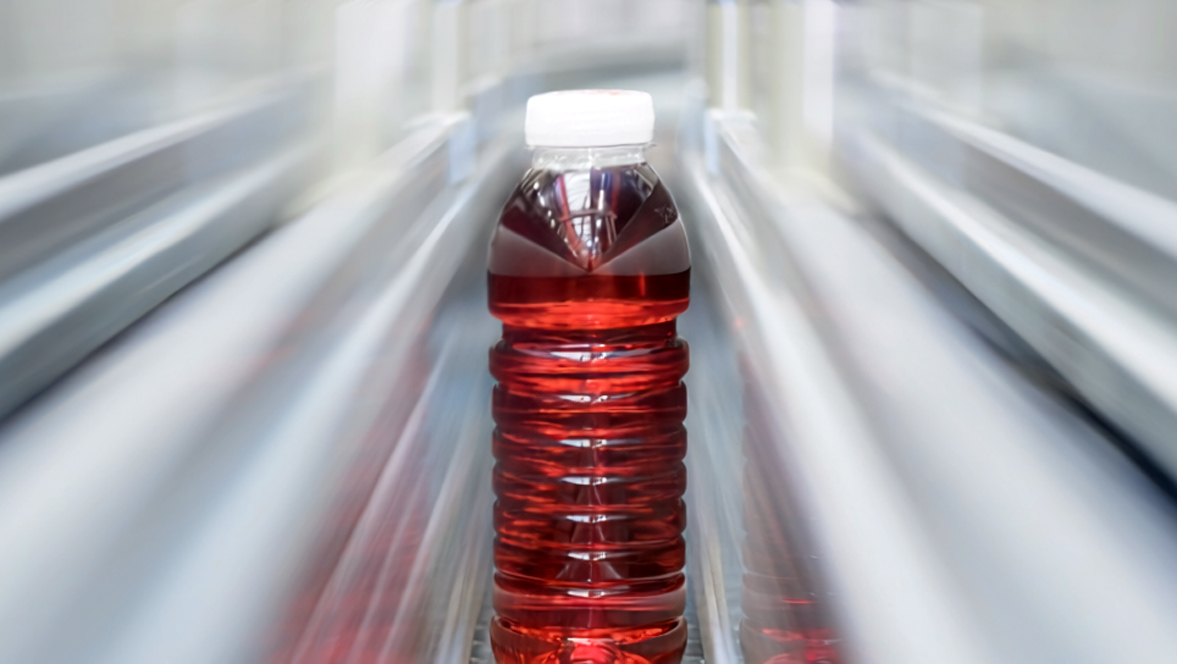
A major source of avoidable waste arises directly after the filling process. At this stage, the bottle is filled but not yet closed. On the transport path between the filler and the capper, even the slightest movements of the conveyor system can cause the liquid to slosh and spill. What appears minimal at first glance can add up to substantial losses on high‑performance lines – resulting in wasted product, additional cleaning cycles and increased energy and water consumption. This is where a crucial lever for greater sustainability in filling technology lies.
With its Agentic Digital Twins, Krones is setting a new benchmark in the prevention of product losses. These intelligent digital twins map the entire process environment with exceptional precision – down to the movement of a single droplet – and use artificial intelligence to actively prevent product waste. By combining real‑time simulation, physical modelling and AI‑driven optimisation, critical situations can be detected early and corrected automatically. The machine continuously learns and transfers optimum settings directly to the real line. The result is not only more efficient production, but above all a significantly more resource‑efficient one.
Sloshing simulation: small losses, big savings
A standout example demonstrating the sustainability benefits is the sloshing simulation. It ensures that the product in the open bottle remains stable and does not spill – even under demanding conveyor and transport conditions.
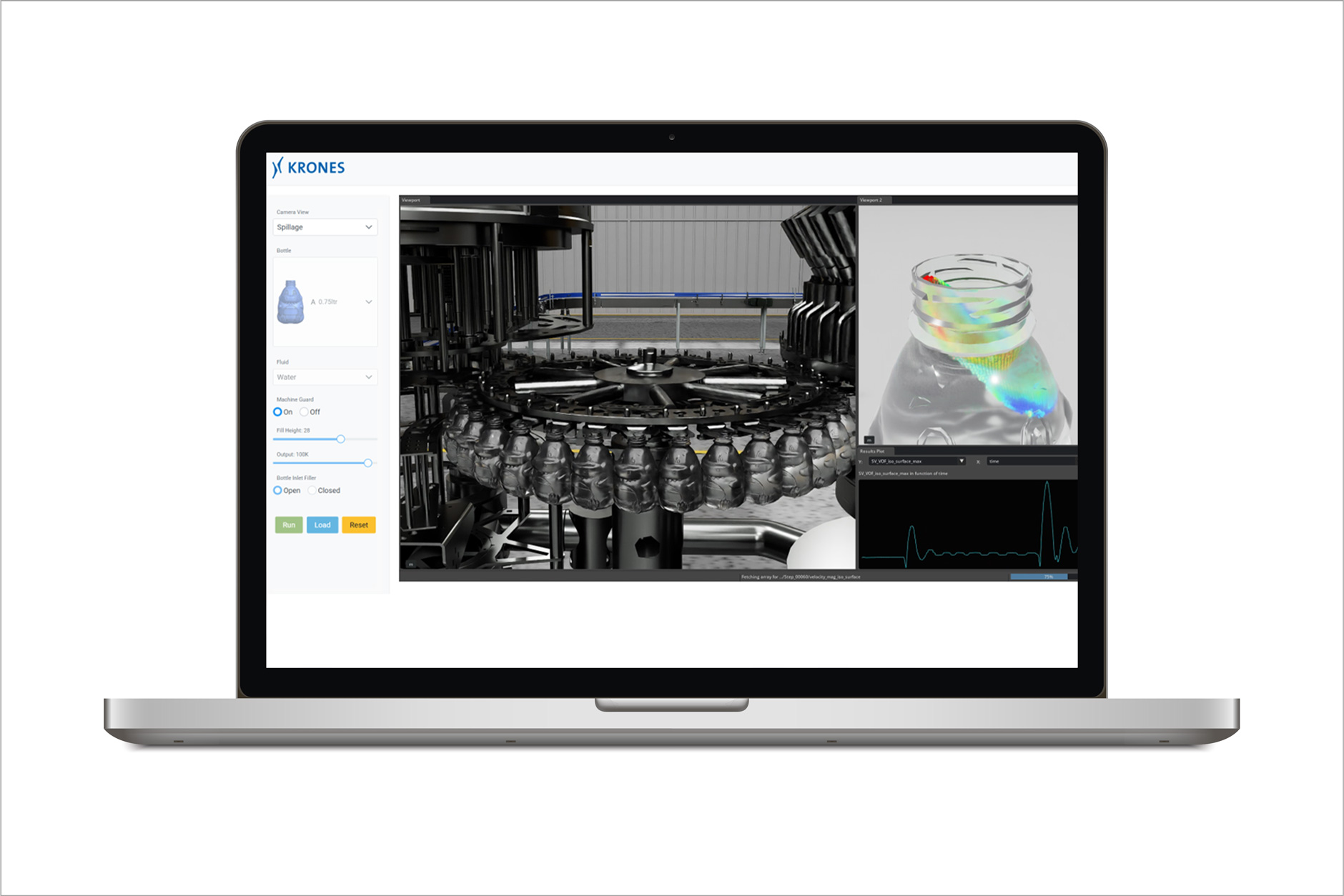
The impact is remarkable: “If only a tablespoon of product is spilled during each filling operation, this can add up to as much as 30,000 litres of water per day on a line running at 100,000 bottles an hour,” explains Thomas Albrecht, the technical lead for the project at Krones. He adds: “The AI‑supported sloshing simulation prevents exactly this type of loss – a direct contribution to reducing raw‑material consumption, wastewater volumes and energy use.”
Conclusion: Technology that protects resources
The Agentic Digital Twins provide far more than increased efficiency. They enable:
- significantly reduced product waste,
- fewer cleaning cycles,
- lower water, energy and raw‑material consumption and
- more stable and sustainable production processes.
In doing so, Krones is creating a technological foundation that helps beverage manufacturers achieve their production goals sustainably and responsibly – drop by drop.